Loneliness
The Narrow Road to the Deep NorthLoneliness is a defining condition of Dorrigo Evans’s postwar life: not simply the absence of company, but an inward separation that persists inside marriage, fatherhood, public service, and professional achievement. The novel places this private void beneath the image of a famously sociable man, then shows how attempts to escape it through memory and new affairs only make it more pronounced.
Public sociability and private emptiness
Ella Evans once described Dorrigo as the loneliest man in the world at a dinner for the College of Surgeons’ executive committee. The company laughed, apparently unable to reconcile her claim with the genial figure they knew. The gap between reputation and experience is central to his loneliness: Dorrigo feels alone in his marriage and with his children, but also in the operating theatre, on the many medical, sporting, charitable, and veterans’ bodies on which he serves, and even while addressing a meeting of a thousand former prisoners of war. His isolation is not caused by a lack of people around him. It is present in the very settings where he is most visible and connected.
The narration gives this condition an image of exhausted emptiness: Dorrigo is like a lighthouse whose light cannot be relit, seemingly trapped in a dream or nightmare from which there is no escape. In recurring dreams, he hears his mother calling from the kitchen; when he goes inside, it is dark and cold, with charred beams and ash, and nobody home. The scene turns loneliness into a failed act of return: even the imagined call that might summon him to safety leads only to absence.
Marriage and the distance of family life
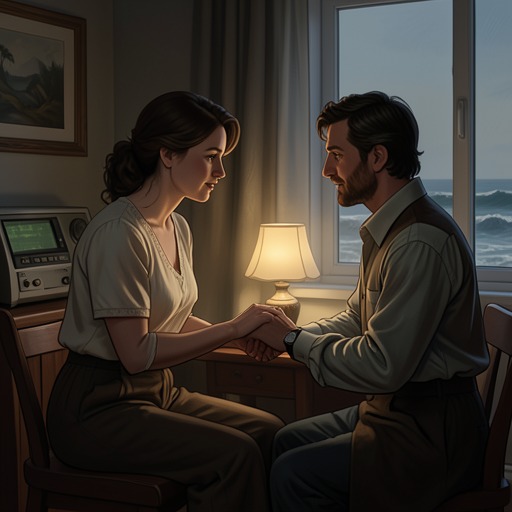
Dorrigo does not regard his marriage to Ella as a wasteland or simply as a failure. He believes that he loved her, and remembers the peace he sometimes found leaning against her and breathing in her scent. He and Ella also work at love in the practical manner of people who have committed themselves to a life together. Yet those experiences do not undo his estrangement. The marriage can contain tenderness and shared effort while remaining a place in which he feels alone.
His distance from their three children carries a similar contradiction. He loves them more deeply as his travels take him farther away, but his manner as a father is one of benign neglect. He had not expected the children to reproduce the emotional pattern of his marriage; their enmity and coldness toward one another therefore wound him. When he sees them echo the cruelty and callousness he has shown Ella, he begs them not to be cruel and fears their estrangement may not be temporary. He recognises himself as unfit for fatherhood, yet stays the course, unsure whether this persistence is duty or surrender to private terror.
Shared life without release
Over the years, Ella becomes Dorrigo’s most formidable ally and most trusted adviser. She soothes him when he is enraged and encourages him when he meets obstacles. As his memories of Amy Mulvaney recede—first for weeks, then months—his life with Ella acquires the weight of accumulated, ordinary intimacy: raising children, supporting one another, sharing conversations and small routines, and attending to illness and grief. The bond is made from years of practical and tender experience, not from any simple resolution of what love means.
That closeness does not cure Dorrigo’s loneliness. The more binding his life with Ella becomes, the more complete his inward solitude feels. The contradiction is not that the marriage contains no care, but that care and companionship fail to reach the part of him that remains estranged. Their shared life is real, yet it cannot make him feel accompanied in the deepest sense.
Repetition and the failure of escape
Dorrigo repeatedly seeks other women, but the affairs do not break the silence around him. He continues philandering even as his vitality ebbs; the danger involved adds to the attraction for him, but does not provide an escape. Instead, each attempt to crack the ringing quiet amplifies it. The pattern makes loneliness less a temporary reaction than a condition reproduced by the very behaviour intended to overcome it.
Amy’s absence continues to shape him even when he is no longer consciously thinking of her. His memory of her gradually breaks into fragments, and Ella’s companionship helps bury it, but the loss remains a force in the shape of his life. Dorrigo’s later loneliness therefore cannot be reduced to separation from one person, nor can it be repaired simply by the passage of time or the presence of others. The more he tries to outrun the past through new attachments, the more clearly the novel reveals the solitude those attachments cannot dispel.